Friday, March 17, 2017

The Life of Rev. Joseph Henry Thornley

Thornley Chapel
In some of the posts to come I will be introducing to you the founding fathers of Ocean Grove, who
they were, what they did and their importance to our history. I've noticed there is a lot of information made known about the founding mothers of Ocean Grove, but not a whole lot is known about the other half of the story. Who were these men and what was their vision and hope for this little town of Ocean Grove?

It was as a young child I began attending the little chapel in Ocean Grove called Thornley Chapel. Some of my fondest memories were going to Thornley Chapel's children's program on summer mornings at 9am. Being the inquisitive child that I was, I became curious about why the chapel was called Thornley Chapel. "What was a Thornley?" I came to find out that it wasn't a 'what,' it was a 'who.'
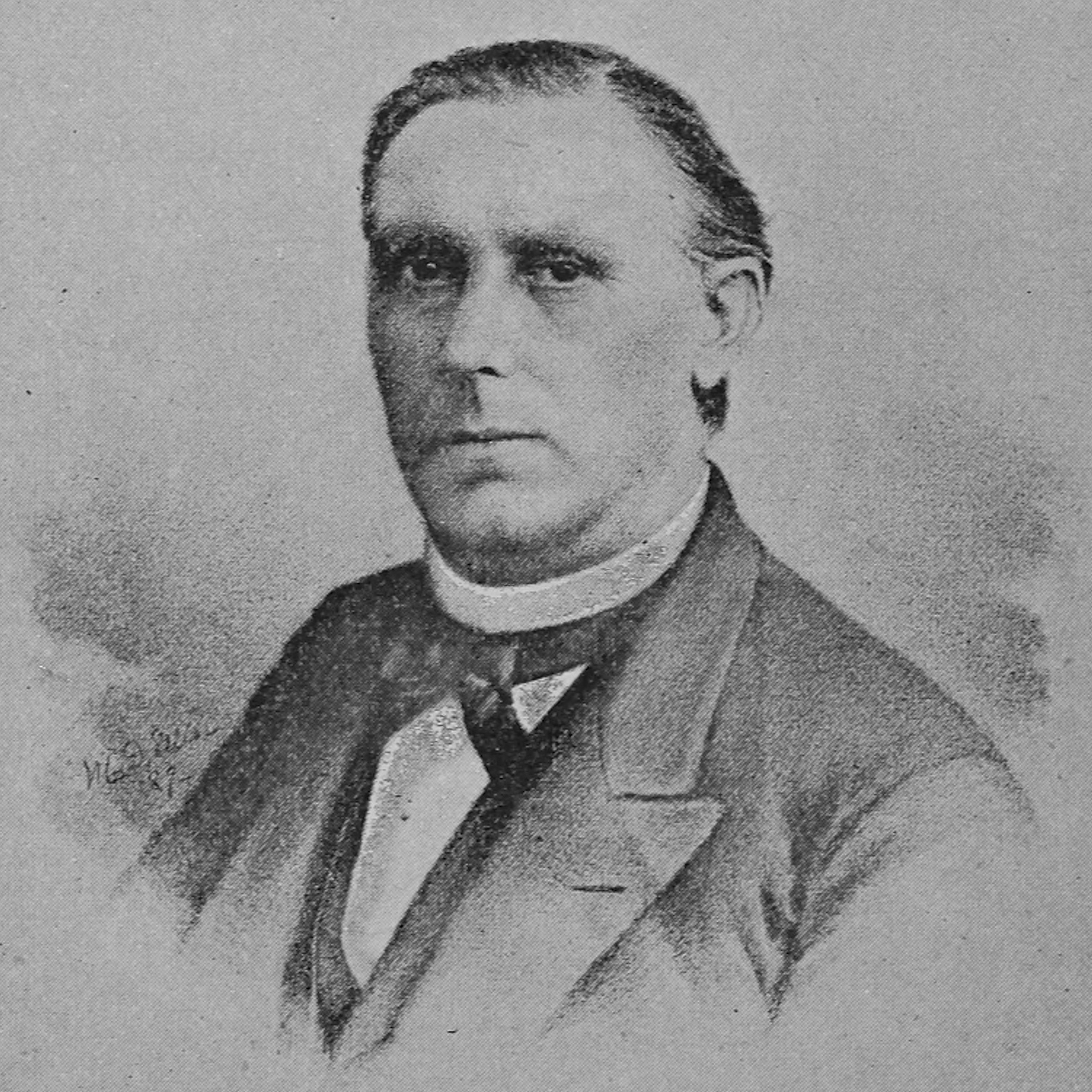
Rev. Joseph Henry Thornley
Rev. Joseph Henry Thornley was born August 3rd, 1827 in County Fermanagh, Ireland. His parent's names were James & Ann Thornley. The Protestant Episcopal Church was the home of his childhood. In 1842 at age 14, he experienced a true conversion and started attending the Wesleyan Methodist Church and it became the place of his choice. At the age of 16, Joseph was entered as a clerk with a Mr. Wood, one of the leading businessmen of Enniskillen in his dry goods business. At his church he was a devoted student in his Sunday school and he soon became an itinerant class leader, going with other young men into the surrounding country on Sunday mornings. They would hold meetings and encourage the people, returning in time for church and Sunday school in the town where they lived.

In the year 1883, Joseph Thornley returned to Ireland and made a pilgrimage to the spot where he was converted. This is his account in his own words... “Yesterday, in company with an old friend, made a pilgrimage to the spot where, in my 14th year, I was blessedly converted to God. I found in the venerable occupant of the house the same old lady who lived there at the time, more than forty years before. It was at a time of revival. The house was filled and crowds were on the outside listening to the singing. I remember to this day the opening hymn:

“O, disclose thy lovely face. 
Quicken all my drooping powers,
 Gasps my fainting soul for grace,
 As a thirsty land for showers, 
Haste, my Lord, no more delay,
 Come, my Saviour, come away.” 

“I entered the room, telling the lady the object of my visit. I want to fall down upon my knees here and give thanks to Almighty God, who more then 40 years ago, when a little school boy, saved me in this very room. We all knelt and sung, “O happy day that fixed my choice,” &c. After the stanza, “Tis done, the great transaction’s done,” I poured out my heart’s warmest thanksgiving, amid sobs and tears, and while still on our knees, I sang the doxology and pronounced the apostolic benediction. “As we arose we all felt the presence of the Triune Deity, for it was God’s house and the gate of heaven. “Taking the hand of the aged widowed saint, amid flowing tears, I bade her an affectionate adjeu, until “On zion we stand having reached the blessed shore, with harps in our hands, we praise Him evermore.”  
Ocean Grove Record 2/23/1889

The Cruise of Life
It was in 1850 that Joseph Thornley came to the United States at the age of 22. He arrived in Philadelphia on July 4th. He entered as clerk in the dry goods store of A. McElroy. It was on his way over on the ship that he met the woman who would become his wife, Maria Deering. They were married some months after his arrival to the United States. It was in 1851 that Joseph Thornley formed a partnership with a person of the name of Chism, a fellow clerk, in the house of L. J. Levy & Co. Thornley and Chism opened a dry goods business on Spring Garden Street, above 8th. A few years later the health of Mr. Chism declined, so that he had to retire, leaving Thornley sole proprietor.


There isn't much known about Thornley for a number of years after this. It was about 1861
( exact year unknown in this research,) we pick up the fact that he became superintendent of the Central Church Philadelphia Sunday School. It was in 1864, while in his mid thirties, that Thornley received his local preacher's license. This is an account which was found that gives us more information. It was from a letter written to Rev. A. Wallace, D. D. owner of the Ocean Grove Record by Rev. D. F. Price. :

"It becomes me to write of Bro. Thornley, because it was once my privilege to be his pastor, and our intercourse in these relations for two years were of the most pleasant character. It was during the eventful period of our civil war. I was pastor of Central Church, Philadelphia. It will not be out of place to say, while I was an anti slavery man and patriotic in my zeal for the Union cause, I was not ultra, but strictly Methodistic in my views, and being a Peninsula man, I was suspected by some of being in sympathy with the rebellion. Bro. Thornley had heard of it; he was unacquainted with me, perhaps he had never seen me. On my first visit to Central Church, the Sabbath morning after Conference, I went to the Sunday school, of which Brother Thornley was superintendent, to whom I was introduced by Brother John Celesbury, who accompanied me. Brother Thornley introduced me to the school as a body and to each teacher and class, and, as he told me after, to use his own language, “I made up my mind that one poor sinner (meaning himself) would be your friend.” And I am glad and grateful to testify, true to his resolve, he was my cordial and steadfast friend. O, how pleasant and joyous was our personal, social and Christian fellowship! He was one of the pillars of Central Church, one of the heroes of the Lord’s hosts, and one of the true and faithful of the saints. Liberal with his means, wise with his counsel, modest in his zeal, and untiring in his devotion to the interests of the church. Although soon by a change of residence to remove his membership to Spring Garden Street Church, he gave a thousand dollars to pay off a mortgage on Central. He abounded in “every good word and work.” It was my privilege to bring his name before the Quarterly Conference of the charge for local preacher’s license, which was given him by Dr. Castle. My intercourse with Brother Thornley in private and public during my ministry at Central forms one of the richest pictures in the gallery of memory."
By REV. D.F. Price, Ocean Grove Record 3/9/1889

It was in July of 1869, that Joseph Thornley and his wife, Maria, came to what would become Ocean Grove for the first time. Nine other families gathered together along with them for rest and religious fellowship. They set up camp in what is now Founder's Park. A few days later, on the evening of July 31st, the first religious service in Ocean Grove was held at the urging of Mrs. Thornley, in the Thornley tent. Some months later, on December 22nd, the Ocean Grove Camp Meeting Association of the Methodist Episcopal Church was formed. This took place at the Trinity Church in Trenton, New Jersey. Joseph Thornley became a charter member at this time and also part of its executive committee.

The Devotional Hour
Joseph Thornley was the founder of the Ocean Grove Sunday schools and was their first superintendent. It began with only a handful of students who gathered in two or three tents on a straw floor. It wasn't long before it grew to very large proportions and became known throughout the country. It was comprised of 3 departments, the Primary Department, the Intermediate Department and the Adult Bible Class. The peak attendance for all three departments on one particular Sunday in 1887 was 5,877. This was the highest on record during his administration. It was said of Thornley that he was a man of the highest integrity and at the same time of the most genial and joyous temperament. From the beginning of the organization until the end of his life he held the office of superintendent of the summer Sunday school and there wasn't a child who didn't adore him. He was never too busy or too involved in other matters, to take the time to give a smile or a word of encouragement to the children.

In 1881, Joseph Thornley retired from the dry goods business, after having been in active business life for more than 30 years. It was on October 26th, 1882, that Joseph Thornley lost his wife, Maria, after a lengthy illness. President E. H. Stokes commented on Thornley's loss in the fourteenth annual report of the Ocean Grove Camp Meeting Association as follows:

"One of our number, Joseph H. Thornley, Esq., has been called to mourn the loss of his excellent, and long invalid wife, in whose tent, July 31st, 1869, the first little meeting was held upon these grounds; who after living a devoted Christian life, for many years, ascended, a few weeks after our last annual meeting, to be forever with her Lord. She leaves a trail of light, in which, we walking, hope to meet her in the skies at last." 
 14th Annual Report of the President of the OGCMA

It was on the 22nd of September in 1883, after the death of Maria, that Joseph Thornley boarded a steamship to Ireland to visit the home of his youth. President Stokes later joined him to travel to other locations throughout Europe. They returned on April 15th, 1884.

It was on June 4th, 1884, at the age of 56, that Joseph Thornley married his 2nd wife, Mary R. Dickson, age 26. She was the daughter of Rev. George N. A. Dickson, of London, Canada.

"Wedding Bells.
Our excellent director of the Summer Sunday-school at Ocean Grove, Bro. Joseph H Thornley, accompanied by his bride, formerly Miss Mary R. Dickson, arrived at the Grove and took possession of their Ocean Pathway Cottage last week. They were married June 4th, at the Wesleyan Parsonage, Ontario Canada, Rev. J. N. A. Dickson father of the bride, officiating on the auspicious occasion. The lady spent part of last Summer at the Grove, and is not, therefore, an entire stranger. She is, moreover, an active Christian worker, and in this, as well as other respects, is very highly appreciated and most heartily welcome."
Ocean Grove Record 6/28/1884

J. H. Thornley Cottages, Ocean Pathway Near The Sea.

It was on June 7th, 1885, that Thornley's first child, Fanny Bertha Thornley was born. In the following year, on July 15th, 1886, a son was born to complete the family... Joseph Henry Thornley.

It was in 1888 that Rev. Joseph Thornley's health began to decline. Here is the account from the Ocean Grove record:

"Many of our readers are aware of the fact that for a number of months the health of Rev. J. H. Thornley, so well and favorably known to all who visit Ocean Grove, has been declining. Three weeks ago, by advice of his physician and some of his friends, he went to the former home of Mrs. Thornley, at London, Ontario, Canada, in the hope that change might be helpful. The latest intelligence is not as hopeful as we could desire. His wife was summoned on Tuesday. It is a great satisfaction, however, that while the earth side is not as cheerful as we could wish, the heavenly is all brightness, joy and hope."
Ocean Grove Record 2/9/1889

The following words are a testimony to the faith of Joseph H. Thornley, an inspiration to all:

"How beautiful his last testimony, in the February number of the Guide to Holiness, edited by Bro. Hughes. He says: 'Jesus is very precious. He keeps me in perfect peace. I am not so well physically, but the joy of the Lord is my strength. My supporting motto for the coming days is: The eternal God is thy refuge, and underneath are the everlasting arms.'"
Ocean Grove Record 2/23/1889

"The bloody Cross precedes the rocky tomb,
The rocky tomb, the resurrection morn;
The golden light follows the midnight gloom,
The smiles of God, the fiercest earthly scorn;
The Lord Christ suffered all His pathways, through,
Courage, O Saint, He triumphed, so shall you."

    -18th Annual Report of the President of the OGCMA
On February 12th, 1889, at the age of 61, Joseph H. Thornley went home to be with his Lord and Savior. This is what was written in the 20th annual report of the Ocean Grove Camp Meeting Association by President Elwood H. Stokes D. D. in a memorial to Thornley.

"A great bereavement, has come to us all, in the removal from us to the climes of the blessed, at a time when we seemed most to need him, the glad-hearted, sunny-faced genial, devoted, useful and beloved Joseph H. Thornley. White-robed and washed in the blood of the Lamb, he ascended from London, Ontario, Canada, February 12th, 1889, to be forever with the Lord. It was in his tent, at the suggestion of his wife, that the first little informal meeting was held upon these grounds, July 31st, 1869. For nearly twenty years he never wearied in his attention to any duty, secular or sacred, connected with the interests of this place, and counted it his highest joy, in season and out of season, to give his time and strength to promote its welfare. He was a man without reproach, loved by all, diligent in business, fervent in spirit, serving the Lord."

It was after Thornley's death, that the Association decided to create a Memorial Chapel in his memory. They took an existing building from Pitman Avenue and moved it to an empty lot at the corner of Pilgrim Pathway and Mt. Tabor Way (where the chapel stands today.) It had been Joseph Thornley's desire to have a building at this site for smaller meetings. The following is the account which was written in the 20th Annual report of the President ,Dr. Elwood H. Stokes, of the Ocean Grove Camp Meeting Association.


"Thornley Chapel.
For more than a year before Mr. Thornley's death, he, with the rest of us, felt the need of a place
suitable for the smaller meetings. We talked about it almost every time we met. It was among the last things he thought of before going away for the last time. But the time to accomplish the object did not seem to have come.  After his decease, the thought of carrying out the last cherished desire of his heart, in the form of a Memorial Chapel, occurred. The plan was approved, and as a building just the size we talked of was on our hands, the Association, at its Semi-Annual Meeting, in May, 1889, granted the said building, to be remodeled, and the lot at the N. W. corner of Pilgrim Pathway and Mt. Tabor Way, for it to rest on, provided the work of transformation could be made without cost to the general treasury. The President, Vice-President, Secretary, Dr. Alday, and Rev. W. H. Wardell, were appointed to carry out the plan. The work was completed June 29th, 1889, and the house ready for opening on Sabbath, June 30th.
The cost of the improvements, with furniture, organ, and all it contains, is $1,299.58, every cent of which has been raised and paid, so that the Committee has the great privilege and pleasure of presenting it to the Association, at this meeting, free of debt. It is a great satisfaction also to the Committee to add, that the whole sum was cheerfully and promptly raised by the many friends of our saintly and ascended brother"
20th Annual Report of the President of the OGCMA

This little chapel in memory of the inspirational man, Joseph H. Thornley, still stands today. It has been cherished by many throughout the years, as a meeting place where hearts and lives have been touched and changed, by the same Lord and Savior who transformed the life of Joseph H. Thornley. I would invite you to share in the comment section your fond memories of attending meetings and programs held at Thornley Chapel. Until next time... Justin Truth

Monday, March 7, 2016

A Blast From The Past: President Grant at Ocean Grove

Welcome to "The Book Of Historical Secrets." In this post I am doing another "A Blast From The Past" on the topic of President Ulysses S. Grant's visits to Ocean Grove. It was my intention to do a research based post, as in the past, but my latest project is taking a little longer then anticipated. This is an excerpt from a very interesting book detailing the history of Ocean Grove from 1869 to 1919. I hope that you enjoy it.

Ulysses S. Grant the 18th President of the United States
"The fact that the founding of Ocean Grove and the inauguration of Ulysses S. Grant as President of the United States took place in the same year is not in itself a sufficiently remarkable coincidence to receive much emphasis, even from a sentimental point of view. But the accompanying fact that the infant resort was located so near to the President's summer home at Long Branch, and that its first years and period of most phenomenal growth coincided with his two administrations, is somewhat more significant. For this no doubt had much to do with the friendly interest which Grant always manifested toward the place.

During those years it was no infrequent thing to see him at Ocean Grove. Gray-haired men and women who were children here in the seventies remember quite distinctly his occasional visits to these grounds and the keen thrills of excitement that ran through young, hero-worshiping hearts on the days when the news spread—as such news would—that Grant was here. Some of these visits were by invitation and in a sense official. One such was on Independence Day in 1875. The day was really the fifth of July, the "glorious fourth" having fallen that year on a Sunday. But the celebration was on the largest scale which Ocean Grove had up to that time attempted. A large and beautiful new flag was raised with appropriate ceremonies at the foot of Ocean Pathway. The Declaration of Independence was read by Joseph H. Thornley, Esq., of Philadelphia, and a patriotic oration was delivered by the president of the Association, Dr. E. H. Stokes. An invitation to be present on this occasion had been extended to President Grant, who accepted graciously, took an unassuming part in the exercises, and afterward dined with the officers
Pitman House 
of the Association at the Pitman House. Those who were present related with pleasure how, after the dinner, Mrs. Grant, who also was of the company, joined with others in the singing of patriotic and religious songs; and many still remember the hour that followed; when the President was conducted to the Auditorium, where a great crowd of people had gathered and where a kind of informal reception was held, the honored guest giving a generous and willing interval to handshaking. This privilege was especially sought and enjoyed by the many children present, and none entered more heartily into the spirit of the occasion than President Grant himself.

Again, on what was then called Anniversary Day, now known as Founders' Day, Grant was invited
The Second Auditorium
to be present at the commemorative exercises. This also was a notable occasion. A large congregation gathered at the Auditorium. The "stand" had been handsomely decorated with flags and flowers, most of the members of the Association occupying places upon it. Special music was prepared and other attractive features were introduced into the program. It was generally known that the President was expected, and there was a sense of disappointment when, at the time for the service to begin, the seat of honor prepared for him on the right of Dr. Stokes was seen to be still vacant, the chair on the left being occupied by Bishop Scott. But the disappointment was only for a little while. The distinguished guest had been unexpectedly and unavoidably delayed; but, rather than fail to keep his engagement, he arrived after the beginning of the exercises and during Dr. Stokes's Historical Address, which was interrupted long enough for the enthusiastic and affectionate welcome which Ocean Grove always had ready for the nation's hero.

Other visits were made quietly and without any of the pomp and circumstance attached to high position. Such, indeed, were always repugnant to the great and simple nature of the man. The matchless soldier and the nation's chief was also a dutiful son and brother, and during the time that his mother and sister occupied a cottage near Wesley Lake he came at frequent intervals to visit them. These trips from Long Branch were made by carriage, and the President's favorite pair of horses came in time to be as quickly recognized as the man himself. It is not surprising, perhaps, that Main Avenue, so wide and straight and smooth, offered to a genuine horse- lover almost irresistible temptation to speeding; but the big and commanding chief of police, who still holds the same position at Ocean Grove, testifies that on certain occasions when it became necessary for him to lift his hand as a warning signal the President always and instantly complied, reining in his spirited bays to a decorous trot.

But of all the visits of Grant to Ocean Grove, there was one which left a peculiarly deep impression. It was on a Sunday in the height of the season. Dr. John P. Newman, afterward Bishop Newman, had been invited to preach at the morning service in the Auditorium. There were no Sunday trains at that time. In fact, the writer is not absolutely sure whether the railroad had as yet been extended to Ocean Grove or not, though he believes it had. Dr. Newman was Grants pastor in Washington and his intimate friend. It happened also that at the time of his Ocean Grove engagement he was the President's guest in the Long Branch cottage. What more natural, then, than that the President should offer to convey the preacher in person in his private carriage to Ocean Grove and the Auditorium on that Sunday morning? This was the arrangement made and communicated to Dr. Stokes.

But with it arose an unanticipated source of embarrassment. According to the by-laws, no vehicle could be admitted to Ocean Grove on Sunday. The small gates were open for foot-passengers, but from midnight Saturday until the same hour on Sunday the large gates were kept tightly closed. What was to be done? Hundreds of visitors came every Sunday, in all kinds of conveyances, from the surrounding country; but they all alighted unquestioningly outside the in closure and walked in. This involved no little exertion and sacrifice of comfort on a hot summer's day; for there were no pavements or concrete sidewalks in Ocean Grove then, and trudging through the soft sand and flying dust could scarcely have been agreeable. But law was law, in those early days, and was cheerfully respected.

Main Avenue Gates

Here, however, was an unforeseen situation. The President of the United States was about to honor the place with his presence. Could the law be set aside? On the other hand, could even seeming discourtesy be shown the President by asking him to get out of his carriage and walk into Ocean Grove like any common man?

Only the other day a lady who was a girl in her teens at the time, recalling the incident, said that she remembered hearing Dr. Stokes confess in a small circle of intimates how great disquietude the dilemma had given him, even robbing him of his sleep at night. But, with the simple directness of the large-natured man and true gentleman, the President of the Camp Meeting Association met the emergency. Candidly and courteously he wrote the President of the United States, setting the case before him. And Grant rose to the occasion with a fineness and nobility that will make his memory forever revered in Ocean Grove. "Who should regard and uphold the law, if not the chief magistrate of the nation?" he replied. "Enforce your rules. When I come to Ocean Grove on Sunday, I will walk in like any other law abiding citizen." And this he did.

After the close of his administration Grant still came sometimes to Ocean Grove. On Sunday, August 13, 1882, he was present at the anniversary service of the Woman's Foreign Missionary Society. The anniversary sermon was preached by Chaplain (afterward Bishop) McCabe, and after the sermon Grant's venerable mother was made a life-manager of the society by the payment of $100, while the ex-President himself became an honorary life-member by the payment of $20.

Quiet, grave, unassuming, and undemonstrative, Grant came and went, maintaining to the very end of his life his friendly relation to this place. His last public appearance, indeed, was made in Ocean Grove, and his last public words were spoken upon the Auditorium platform. But this occasion was of too impressive a nature to be added to these reminiscences, and of it another will have the privilege of writing."
-THE STORY OF OCEAN GROVE 1869 1919 By Morris S. Daniels

I hope you have found this interesting and if you have any questions I will be happy to answer them. Please share this blog with others who may find it of interest. I welcome your comments below and thanks for visiting "The Book Of Historical Secrets."

Tuesday, January 26, 2016

A Blast From The Past

This is one of my favorite articles, which I would like to share with you in this post. I have added period photos to add to your reading enjoyment and to give you a picture of what life was like over 140 years ago in Ocean Grove.

From the Evangelist, Dublin, (Ireland,) November 1st, 1874.

SUNDAY AT AN AMERICAN CAMP-MEETING.


Beach Scene
Ocean Grove, N.J., is fast becoming a favourite summer resort for those who desire a quiet seaside residence apart from the pomp and show of fashionable watering-places. It is situated about six miles south of Long Branch, which is one of the most celebrated summer resorts in America. Ocean Grove is connected with the latter by a line of stages, no railway having yet been built, although one is now in contemplation. It is situated on the shore of the Atlantic Ocean, where the sea-view is one of unsurpassed grandeur. There is a good sandy beach, which affords visitors a rare opportunity for surf-bathing, and for whose accommodation bathing-houses have been erected and life-lines placed. 


About five hundred yards from the beach is the grove from which the place takes its name. It belongs to an Association, who have the entire control of it. It is laid out into avenues and
streets, and quite a number of elegant villas and cottages have been erected, so that it may safely aspire to the name village, although in the winter time its census would be small. This summer it was reckoned to have about ten thousand visitors at one time. The avenues and streets are mostly named after prominent Methodist worthies, whose names are familiar to
all Wesleyans. There is Heck Avenue, Embury Avenue, Coke* Avenue, and many others. There are also two beautiful sheets of water, called respectively Wesley Lake and Fletcher
Lake. The former is of considerable size, where visitors can enjoy boating in perfect safety. But the Grove Association had a higher object in view than mere recreation, when the scheme was contemplated. It was proposed to establish a camp-meeting here with the specific purpose in view of promoting the advancement of Christian holiness. A more beautiful place could not have been selected for the purpose, the grove affording good shelter from the rays of the sun, and the additional attraction of the wide ocean, the thunderings of which can be heard from the camp-ground, as the waves dash them-selves on the shore, adding beauty and effect to the scene. The writer had the privilege of spending a Sunday here during the camp-meeting this summer, and a sketch of it may not be uninteresting to our transatlantic friends.

But the principal audience-place is a large bower, formed by fastening branches from one tree to another, at a suitable distance from the ground, thus making a complete-shade overhead. At one end of the bower is the preacher's stand, with a platform elevated about
Bower
four feet from the ground, and capable of accommodating about one hundred people. Around this stand is a railing placed, which serves as an altar for penitents. There are generally two or three services going on at the same time in the camp-ground, but without causing annoyance to each other. With regard to the particular Sunday in question, although there were singing heard from an early hour in the morning, the regular services for the day commenced with a love-feast, at 8.30 A.M. this was largely attended, not less than from three to four thousand persons being present. After the presiding elder had formally opened the meeting, the “speaking” commenced. Never did I see an audience so ready and willing to testify for Christ, or so many testimonies given in so short a time. In such a large audience, it was necessary that the testimonies should be short, and this was strictly adhered to. No sooner did one sit down; than another arose, and frequently two or three together; so that there was no “dragging” in the meeting. Some contented themselves with repeating a verse of Scripture expressive of their desires, and others by repeating a suitable hymn, and many expressed themselves in a single sentence. One young man arose and said, “Saved this morning by the precious blood.” An old veteran preacher got up and said, “That he was now laid aside from active duty, and was sitting in his tent-door watching the progress of the battle; but,” said he, “I never see an empty saddle, but I am ready to fill it.” A gentleman from Chicago said, “That he had come from what might be termed „the land of fire,‟ where he had witnessed the devastation caused by it in a few short hours, and that it was not his desire to go to dwell with everlasting fire.” Another said, “He had come to Ocean Grove the previous year with no particular object in view; but during his stay he attended the services, and was convinced of sin, and returned to his home a new man. On coming back this year to the “Grove” he said the text came to his mind, Ex 3:5 "put off thy shoes from off thy feet, for the place whereon thou standest is holy ground.‟”

A colored lady gave her experience with such touching earnestness and depth of feeling, as to draw tears from many eyes. On concluding she sang a beautiful song, the chorus of which was “I‟m saved by the blood of Jesus.” Another compared Ocean Grove to Mount Pisgah from whence a clearer glimpse of the Promised Land could be obtained. But it would fill a volume to rehearse all the experiences that were given, which were all expressive of the undoubted witness of the Spirit.

The love-feast was concluded at 10 o‟clock, and the preaching-service then commenced. It was conducted by the Rev. Anthony Atwood, of Philadelphia, who took for his text Acts 1:8 “But ye shall receive power after the Holy Ghost is come upon you,” &c. He particularly dwelt on “holiness,” and pressed his conviction that a man may have as much grace as will save him; but unless he is endued with “special power” he cannot be useful in saving others. He concluded his discourse with an appeal to all to seek a deeper baptism of the Holy Spirit. The congregation was dismissed about 12 o'clock, and Sunday-school was announced to begin at 1.30. At the hour appointed the grown-up scholars met in the large tent, and an infant-class was formed in another tent, while an advanced Bible-class occupied a third. The infant-class sang some beautiful Sunday-school hymns just before dismissal.

During the school-hour a large congregation had collected at the preaching-place, to hear
 Amanda Smith
the exhortations of Amanda Smith, a colored lady, of camp-meeting notoriety. I understand she is a member of Old John Street Church of New York, which is the first Methodist Episcopal Church of America. Her discourse was full of fire, and her appeals to the impenitent searching and powerful. She invited all who had a desire to come to the Saviour to hold up their right hand in token thereof, and a goodly number responded to the invitation. She then asked them to come up to the altar, which was soon crowded with earnest penitents. A glorious time followed; but how many were brought to God will only be known when the secrets of all hearts are revealed. 
At 6 o‟clock a beach-meeting was held on the sea-shore, during which exhortations were given, hymns sung, and prayers offered.

Beach Meeting
“Beside the sea the wondering people stood,
Or sat, or bowed. Devotion's earnest throng;
the spirit, lost in worship's attitude, Mingled
its praises with the billow's song.”

About 7 o'clock the audience began to move up towards the preaching-place, singing, as they went, that favorite song— “In the sweet by-and-by We shall meet on that beautiful
shore.” Here the evening preaching-service was held, while another service was going on in the large tent, and still a third in another tent, there being generally three or four congregations meeting at once.

After the sermon a penitent-meeting was held, and, as usual, the alter was crowded; the cries of the seeking penitents could be heard all over the camp-ground. One young man had thrown himself on his knees on the ground, and seemed unconscious of the presence of any one while he communed with God in prayer. Much good was done by exhorters and others going through the audience, and speaking words of counsel to such as seemed disposed to listen. In the good work they were ably aided by Sister Amanda Smith, who seemed to be in her element at the penitence-meetings. She also gave an address, in which she related the following incident: She said she had been coming from Pittsburgh a few days before in company with a friend, and a man came along the railway-cars, putting a lighted lamp in each. She asked her companion what that was for? it being broad daylight all the time. Pretty soon, however, they came to a very long tunnel, and, speaking to her companion, she said, “Ah! I see now what the light was for.” Carrying on the idea, she applied it to spiritual things, and said, “that God never sent his children through dark places, without giving them light to guide them.”
Tent Living
Many souls professed to have peace, and the meeting continued up to 10 o'clock, and was then dismissed. But the difficulty seemed to be to get the people dispersed, and many still lingered around the altar, where so many had been blessed. In many of the tents could be heard the voice of prayer and weeping, as some sin-burdened soul wrestled with God in secret, and Jacob-like, saying in his heart, Gen 32:26 “I will not let thee go, except thou bless me.” Soon after 10 o'clock the camp-bell rung out its good-night, and in a short time all had sought the shelter of their tents for the night. Thus closed the Sunday at camp-meeting.

* To my knowledge there was never a Coke Avenue in Ocean Grove.

Map of Ocean Grove 1873
In "The Book Of Historical Secrets," I will be interspersing some old newspaper articles, passages from old books and sermons by the founders, which I will call... "A Blast From The Past." Hope you enjoyed this "Blast From The Past."   Feel free to leave a comment, ask questions, etc. I will do my best to respond in a timely manner. Keep your eyes posted for future posts. 

Monday, December 21, 2015

Secrets of the 1883 Anniversary Vase.

In this blog we will be addressing the mystery of the 1883 Anniversary Vase. This past summer I came across information which mentioned a park called Memorial Park, which was located on the corner of Pilgrim Pathway and Olin street, on the same lot where Kearny Bank and the Post Office now stand. My first blog logs this information. It was during this investigation that I learned that this Memorial Vase of 1875, which stood in Memorial Park, was at some point moved to Founder's Park. This put into question everything I had learned in the past, so I dug deeper. In my search I looked through hundreds of newspaper articles and I searched the early annual reports of the President of the Ocean Grove Camp Meeting Association. It was through this search that I discovered that in fact there were two vases called by the same name. One erected in Memorial Park (later moved to Founder's Park) and one erected in Thompson Park (now called Founder's Park.) Somewhere along the way these two vases were historically merged into one, which is historically inaccurate. This is perfectly understandable, considering that there have been a number of Anniversary/Memorial Vases. In order to make things clearer I will refer to one as, The 1875 Memorial Vase and the other one I will refer to as, The 1883 Anniversary Vase.


The 1875 Memorial Vase is the vase which is now standing in the Southeast corner of Founder's Park. The purpose of this Memorial Vase was to commemorate the first religious service and also a memorial for the original Camp Meeting Trustees. The 1883 Anniversary Vase was also to commemorate the first religious service in Ocean Grove, but also a memorial to Maria Thornley (Joseph H. Thornley's first wife.) Maria Thornley was responsible for the first religious service, for it was at her urging that they gathered and had a prayer service. It was here at the Thornley tent meeting that Ocean Grove was born. 


It was thirteen years later (1882) that a group of people returned to the place determined to be the spot where that first meeting was held.  They conducted a prayer service to remember and commemorate that evening in 1869. At this time Mrs. Thornley was in poor health.


MEETING IN THOMSON PARK,
“It was a conception of Dr. Stokes, “Let us go,” he said, “to the spot, or as near as we can determine the place, where Bro. Thornley’s tent stood on that memorable Tuesday evening, July 31, 1869, and hold a half-hour’s prayer service before the evening meeting.” Accordingly, as the sun was sinking in a gorgeous western sky, the people gathered around the small pavilion at the junction of Pilgrim Pathway and Lake Avenue. Hymns were sung and prayers were offered by the president, R. J. Andrews, A. Wallace, J. H. Thornley, Dr. Alday and others, and the story of that first meeting, held at the instance of Mrs. Thornley, its baptism of power and lasting significance, was given by Doctor Stokes.”
-Ocean Grove Record 8/5/1882

Mrs. Thornley's health continued to decline and on October 26, 1882 she went home to be with her Lord and Savior. 

“Mrs. Maria THORNLEY. 
Awaiting a suitable obituary notice of the elect lady whose name stands above, we simply announce the fact of her peaceful death, which occurred Thursday, Oct 26. This event was not unexpected. Her health has been feeble for several years, but her presence at Ocean Grove, with the interests of which she was so prominently identified from the beginning, in connection with her husband, Rev. Joseph Thornley, was as regular as the season rolled round, until last summer. She has been entirely prostrated by severe illness for about a year. How frequently her name was affectionately mentioned in prayer, those in attendance at the last anniversary, and other exercises, will remember. But she is well, for God hath called her to that land where the inhabitants shall never say, "I am sick." Her funeral was largely attended at her sorrowing husband's residence on Green Street, Philadelphia, on Monday last, President Stokes, Rev. Dr. Todd, and others, officiating. The internment was in a beautiful site in West Laurel Hill.”
-Ocean Grove Record 11/4/1882

In 1883, on Anniversary Day (July 31st) a memorial vase (The 1883 Anniversary Vase) in the memory of Mrs. Maria Thornley was erected on the exact spot of the first religious service held in Ocean Grove, which was in the tent of Joseph and Maria Thornley. Here is the account from the Ocean Grove Record, the Ocean Grove newspaper of that day: 

“Right on the spot, where it is remembered the tent of Mrs. Thornley was pitched, a beautiful memorial vase had been erected. Some object of this kind, adorning the grounds, and monumental in legend, has, under the devising of the president, marked every anniversary for several years.
 A large gathering, just about sunset, assembled to see the vase unveiled, and joined in song and prayer. Revs. Bros. Daniels, Adams, Thornley, Evans and Wallace, were present, with Dr. Stokes, who addressed the people, and was followed by Secretary Evans, with a statistical resume of the maternal development of this wilderness and solitary place, to its present comeliness and large promise for the future. Inscriptions on the four sides of the vase, recount the facts we have referred to, and especially commemorate the name of the late Mrs. Maria Thornley, as associated with our origin.”
-Ocean Grove Record 8/4/1883

At this point I would like to point out the fundamental difference which differentiates the two vases. The inscriptions on the 1875 vase (in the southeast corner of Founder's Park today) are different from the 1883 Anniversary Vase. This is shown below in the Fourteenth Annual Report's account of the unveiling of the 1883 Anniversary Vase.


“6.30, P. M., the unveiling of the Anniversary Vase took place at the foot of Thompson Park, near Wesley Lake, on the spot where 14 years before, the first religious service was held at Ocean Grove. The objects of erecting the Vase at this point, were two-fold. First, to mark the spot where the first meeting was held, and secondly, to perpetuate the name of Mrs. Thornley, who had died during the year, and also to commemorate the fact that she arranged for said Meeting. The Vase has the following inscriptions: 


South Side 
“Site of First Meeting held at Ocean Grove,
Tuesday Evening, July 31st, 1869.”
                           
East Side 
“First Meeting at Ocean Grove, held in
 Joseph H. Thornley’s Tent, July 31st, 1869.”


North Side 
“Mrs. Joseph H. Thornley, (deceased, 1882) 
arranged for the First Meeting held at 
Ocean Grove, July 31st, 1869.”

West Side
“The First Meeting held at Ocean Grove, 
July 31st, 1869, numbered 22 persons.”


After the unveiling, prayers were offered, songs were sung and addresses made, showing the progress of the 14 years past, and the Meeting closed amid general rejoicings and congratulations.” 
-E. H. Stokes D. D. Fourteenth Annual Report

Where was this 1883 Anniversary Vase located? After an intensive search of books, postcards and newspaper articles, I believe I have discovered where it once stood. Everything points to the Northwest corner of Founder's Park near the Heck Street Bridge.


(note the vase behind the tree in the photo on right)

Here are newspaper articles and a 26th annual report excerpt, telling the location of the 1883 Anniversary Vase and the anniversary exercises of that day.


The 17th Anniversary
“Last Saturday evening as the sun was disappearing, about 1,000 people gathered on the supposed spot, now marked by a memorial vase at the northwest corner of Thomson Park, to commemorate the event. Dr. Stokes, who conducted the original meeting, was there. Revs. R. J. Andrews and J. H. Thornley, two of the attendants at the first, were also present, and while hymns were sung and prayers were offered by the president, Vice-president Ballard, Dr. Hanlon, Dr. Wm. Reddy and others, the scene became quite impressive to many strangers who mingled with the audience.”
 -Ocean Grove Record 8/7/1886

Twenty-Third Anniversary.
“The first religious Service ever held in Ocean Grove occurred July 31, 1869, in the late Rev. Joseph H. Thornley’s tent which, as near as can be determined, stood on the spot now marked by a memorial vase in Thomson Park, overlooking Wesley Lake, near the corner of Pilgrim Pathway and Sea View avenue.  It was only an Impromptu prayer meeting, but the event has been celebrated every season for the last 20 years,...” 
-Ocean Grove Record 8/6/1892

TWENTY-SIXTH ANNUAL REPORT
“Wednesday, July 31st, was the anniversary proper. There was an out-door service, at the Memorial Vase, in Thompson Park, near the south end of the lower Bridge, across Wesley Lake. A large company of the old and new friends of Ocean Grove, gathered at 6.30 P. M., to listen to the oft repeated story of our humble origin twenty-six years ago. The tides of enthusiasm rose high as narrative, songs, prayers and testimonials rolled in rapid succession. Congratulatory words were spoken by friends from far and near, while the shades of evening seemed to be in holy sympathy with all that was said and done. But the hour is up, the procession formed, and the lines moved on towards the Auditorium, the singers in the lead, while down to the rear the lofty strains of "Marching to Zion," could be distinctly heard by all. As the crowd reached the open doors of the Auditorium, the organist sprang to her place, pulled out the stops of the great instrument and in full blast joined in the familiar strains, while the congregation already assembled, arose, and with exultant voices joined in the general joy.” 
-E. H. Stokes D. D. 1895, TWENTY-SIXTH ANNUAL REPORT.


This is a postcard from sometime after 1908... note the vehicles. The pavilion in Founder's Park was gone at this time:


The last mention I found of the 1883 Anniversary Vase was in the early 1920's. The last postcard I found of it was postmarked 1934. It would seem from the picture of it in "The Story Of Ocean Grove 1869-1919" that the vase was in quite a bit of disrepair. Perhaps it crumbled and was scrapped. This remains a mystery to be solved.

I hope you have found this post to be informative. Please leave a comment. I enjoy reading them. I would like any information of the whereabouts or fate of this vase. Does anyone have any old family photos surrounding the 1883 Anniversary Vase? Maybe together this mystery can be solved.